








Price :
QTY :
CART TOTALS :
There are items
in your cart
CART TOTALS :
With this products also buy:


We identified: …


145W Max 3 Ports Output: Type-C 1 Type-C 2 UAB-A
Battery Type: Lithium Ion Battery,Li-ion battery
Battery capacity: 25000mAh(gowh)
Brand Name: UGREEN
Certification: pse,RoHS,CE,FCC
Features: Digital Display
High-concerned chemical: None
Input Interface: USB Type C
Max Output: 200W
Origin: Mainland China
Output Interface: USB-A,USB-Type C
Product Name: 200W 25000mAh two-way fast charging power bank
Shell Material: Plastic
Support Quick Charge Technology: Two-way Quick Charge
Type: Portable Power Bank
Type-C 1 Input: 65W Max
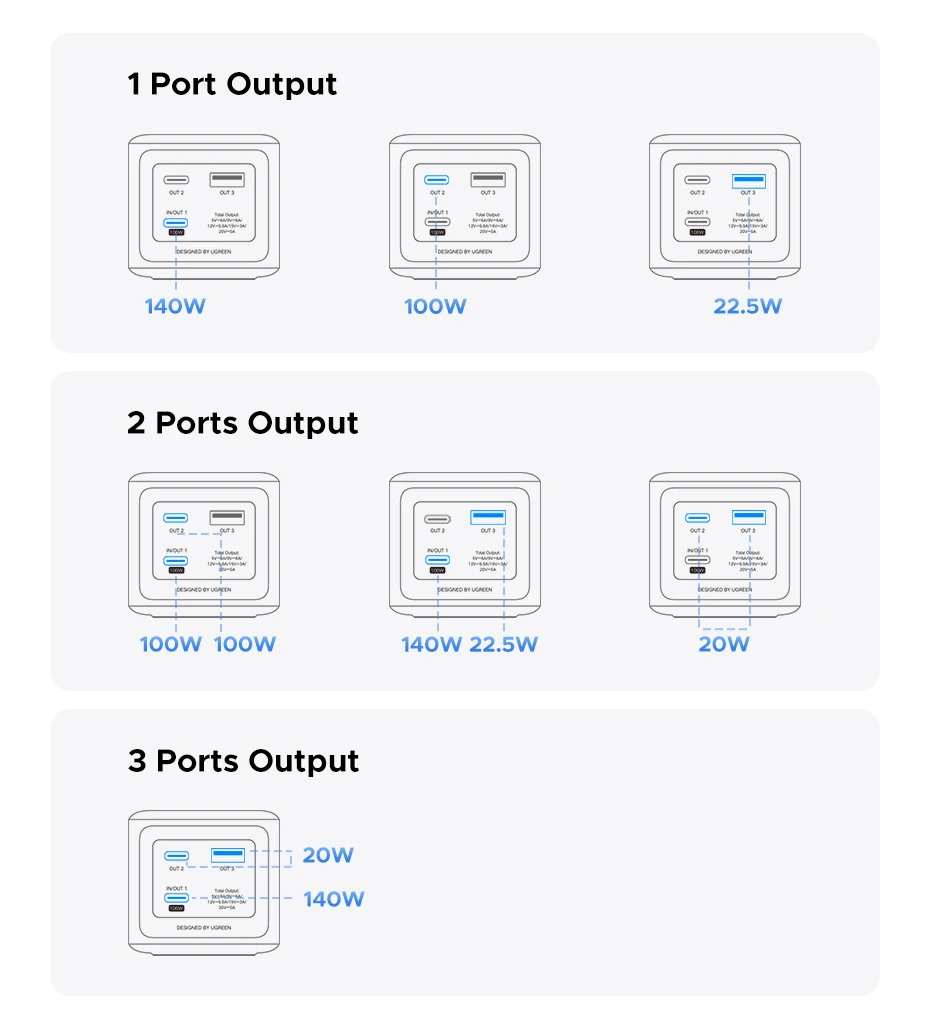
Type-C 1 Output: 140W Max
Type-C 2 Output: 100W Max
UAB-A Output: 22.5 W Max

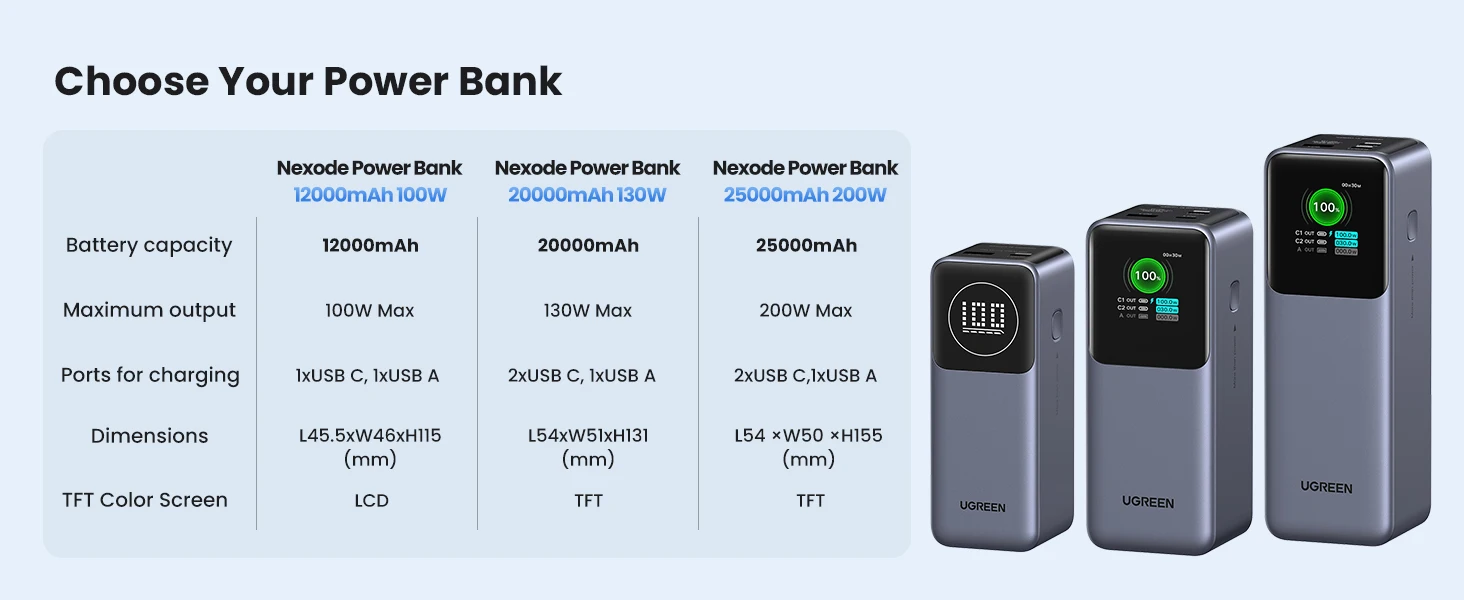
UGREEN PD3.1 25000mAh 200W Max Nexode Power Bank
2USB-C + 1USB-A
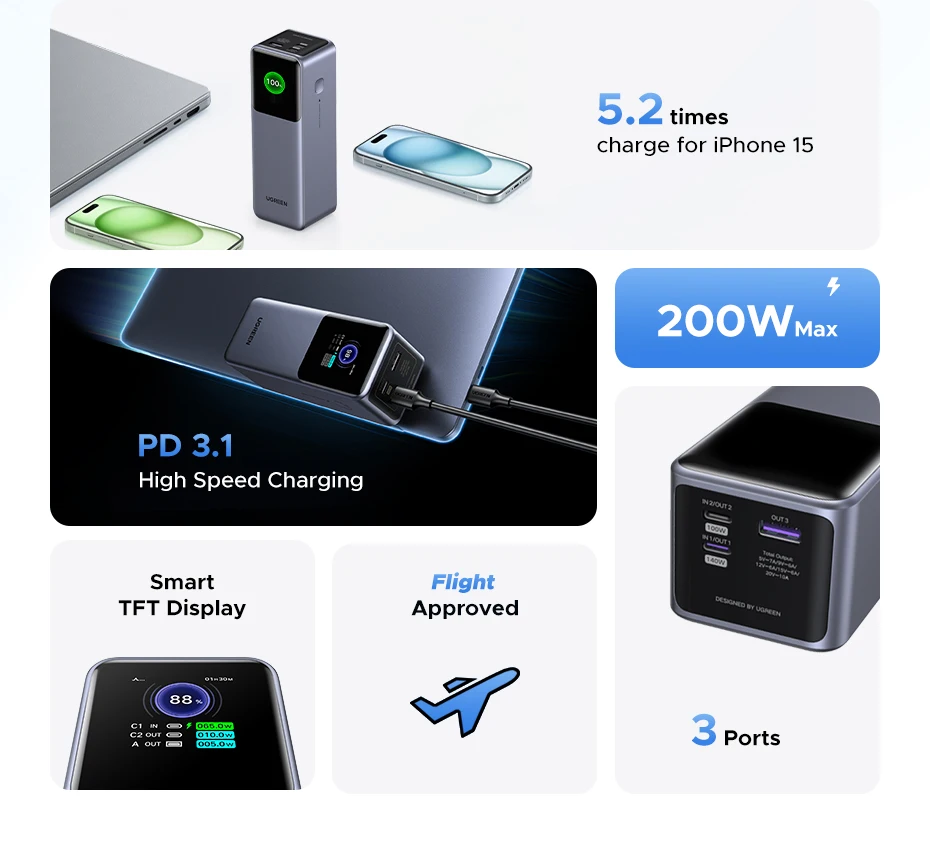
5.2 times charge for iPhone 15
PD 3.1
High Speed Charging
3 Ports 200W Max
Smart Digital Display
Flight Approved
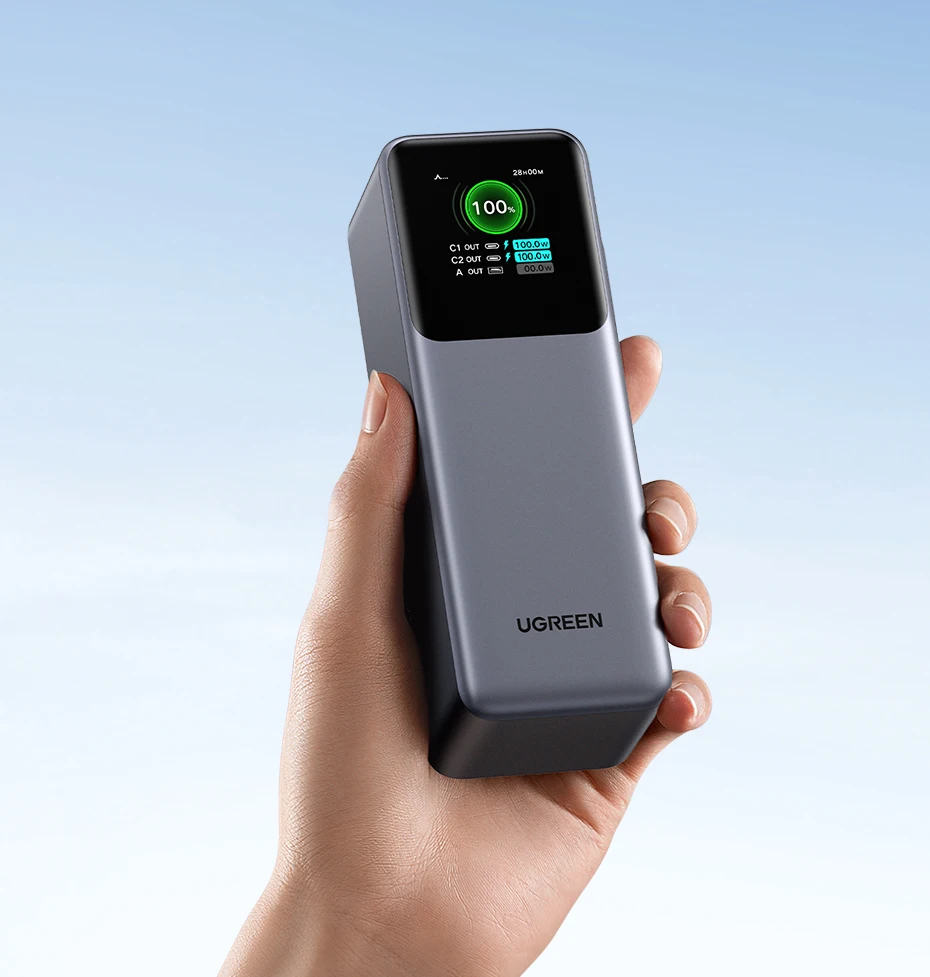
1.54 Inch Intuitive Smart TFT Display
Graphical display for easy monitoring
Home Page:
Remaining Battery Level
Input/Output
Remaining Discharge/Recharge Time
Status Page:
Voltage
Current
Real-time Power Curve
Note: Switch between the home page and status page with single click.
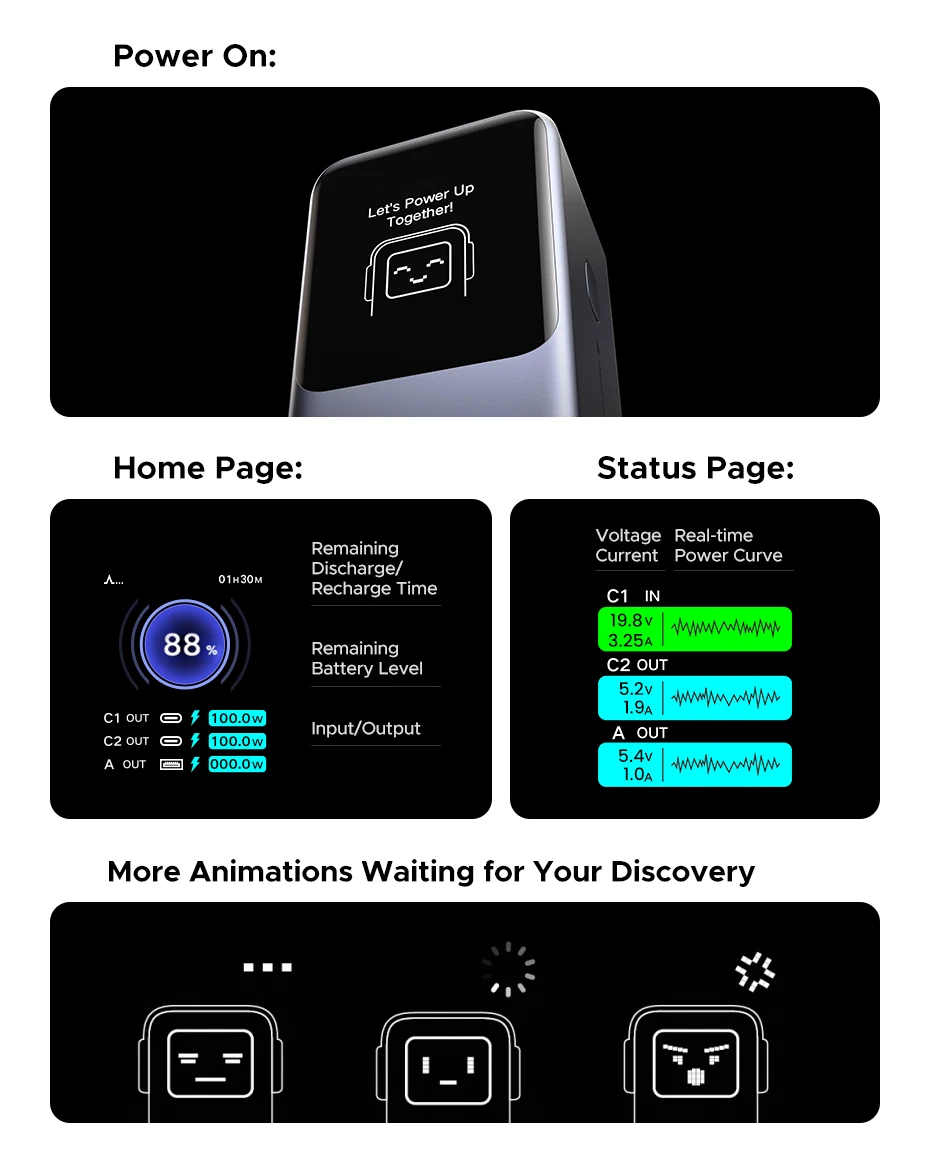
More Animations Waiting for Your Discovery
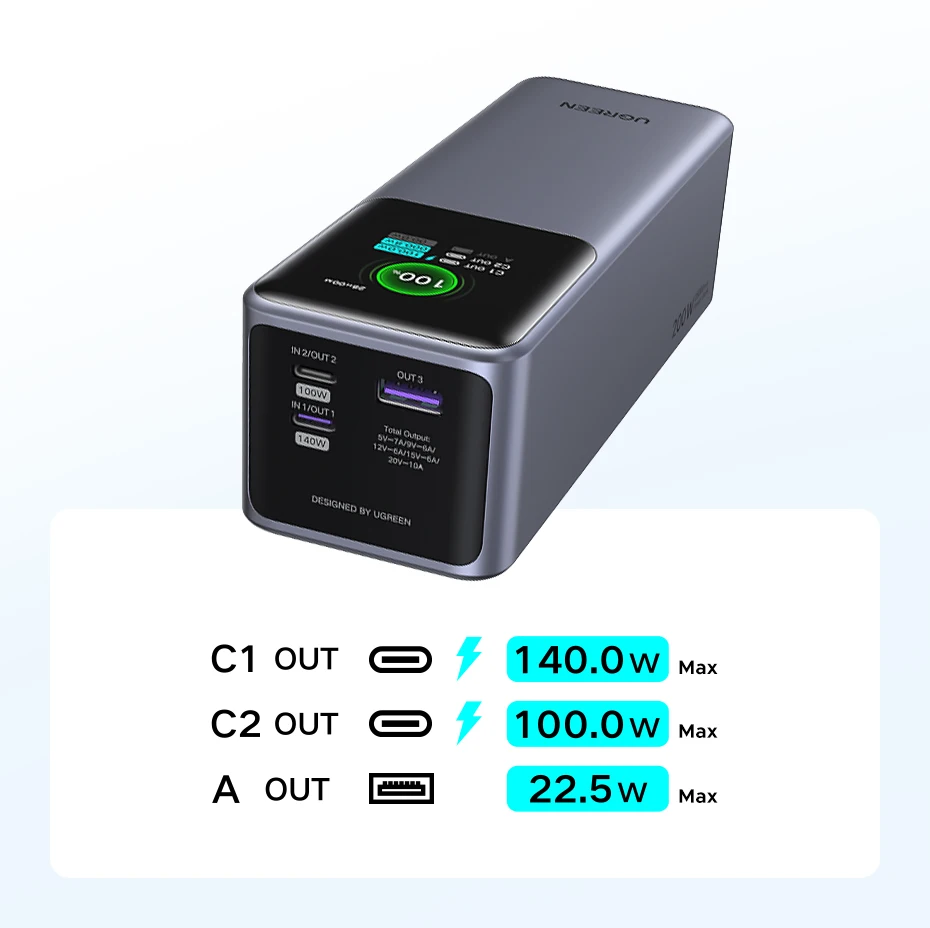
3 Ports Output
USB C1 output 140W Max
USB C2 output 100W Max
USB A output 22.5W
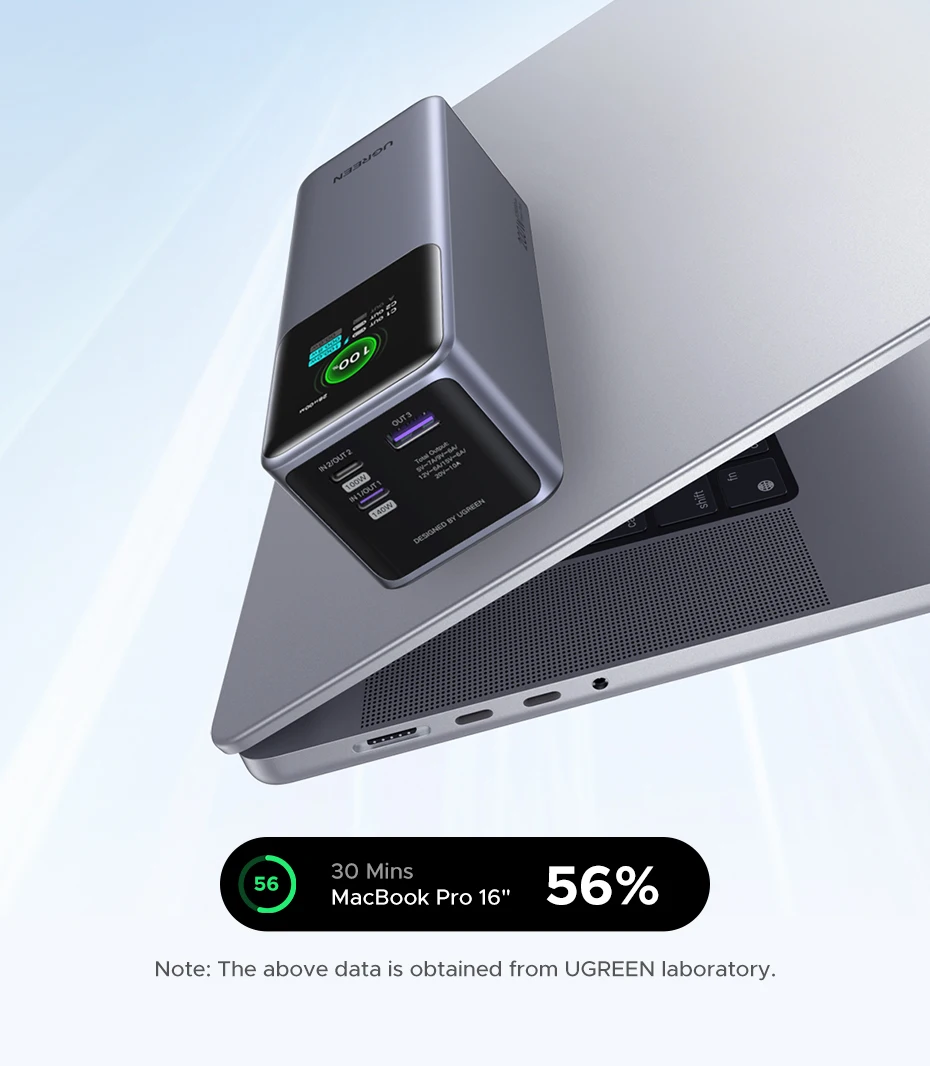
140W PD3.1 for Macbook Pro 16''
USB C1 match with the original usb c cable to realize 140W Fast Cable
Annotation:
30 mins 56%
Note: The above data is obtained from UGREEN laboratory.
What is PD3.1 140W?
PD 3.1 is a new generation of fast charging standard protocol released by the USB-IF Association, which increases the charging power of the single port to a new level of 140W.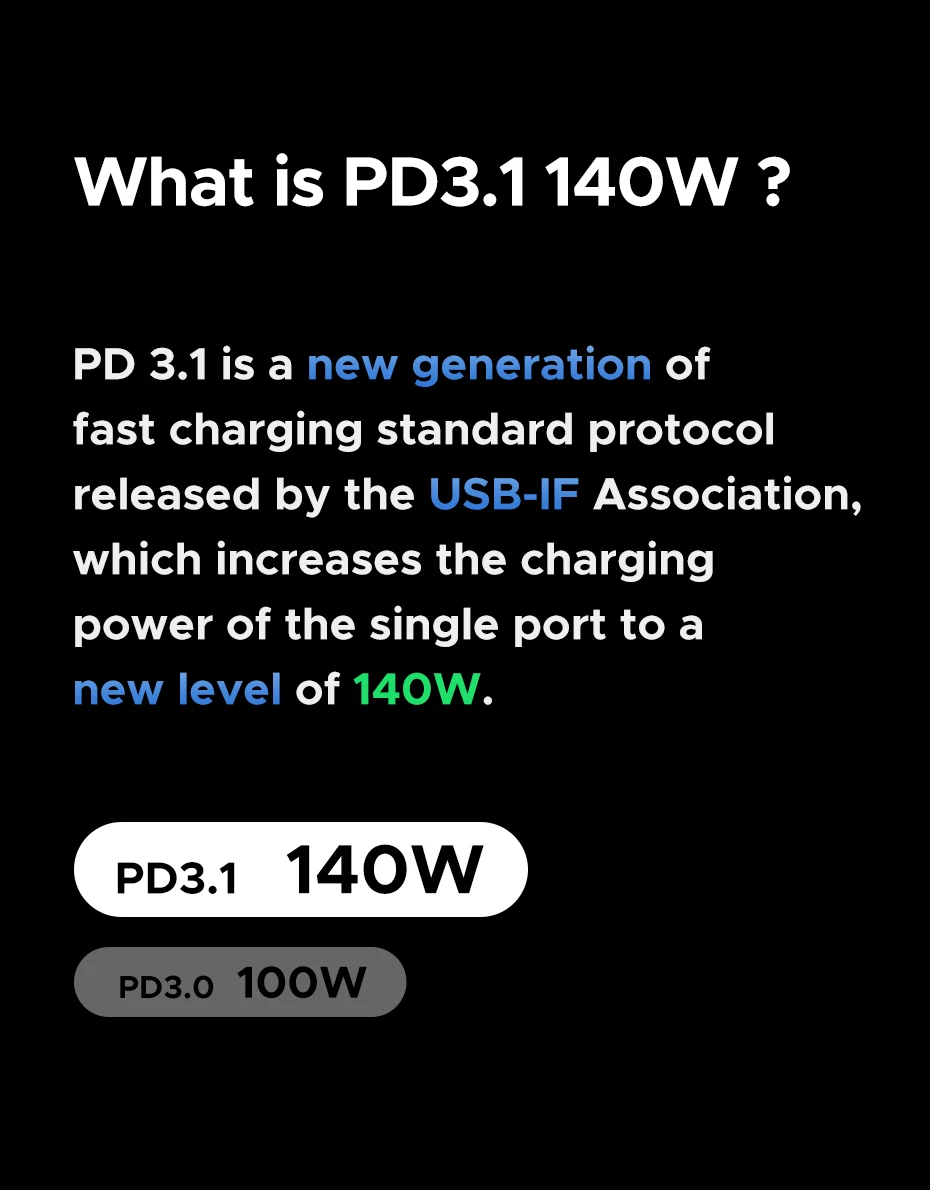
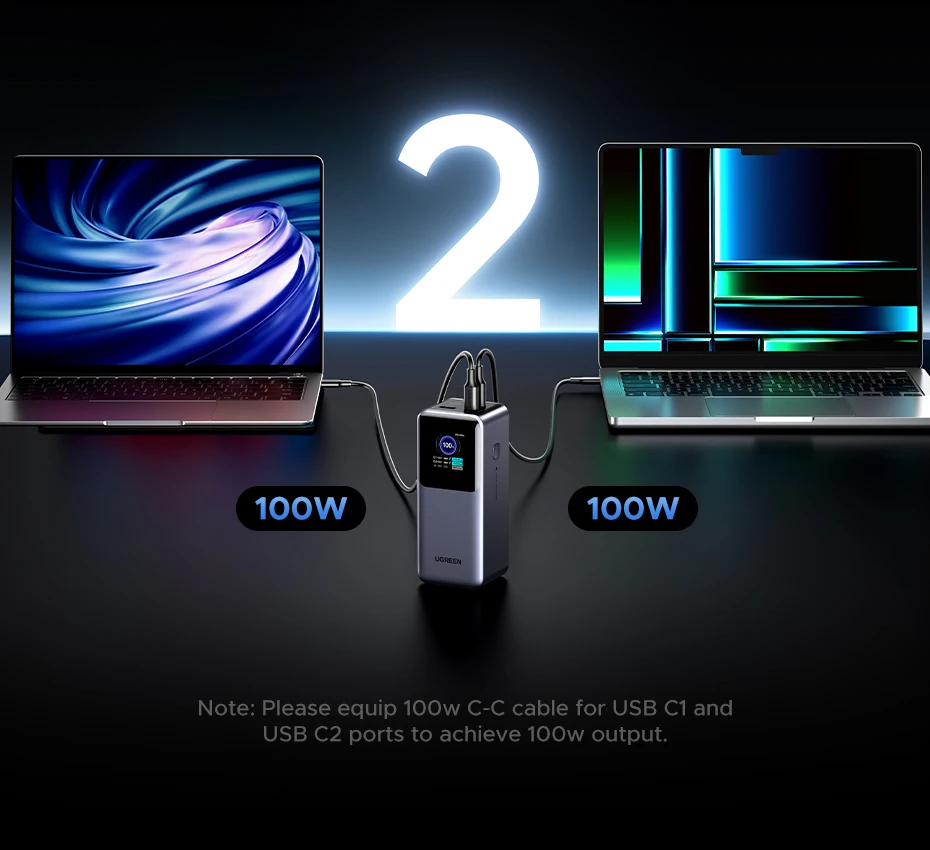
Dual 100W for Higher Efficiency
USB C1+UAB C2, power 2 laptops simultaneously
Note:Please equip 100w C-C cable for USB C1 and USB C2 ports to achieve 100w output.
Power for Days
25000mAh Massive Capacity
5.2 Charges iPhone 15
3.8 Charges Galaxy S24 Ultra
2.4 Charges iPad Pro 11''
0.94 Charges Macbook Pro 14''
Note: This data is obtained with UGREEN 65W charger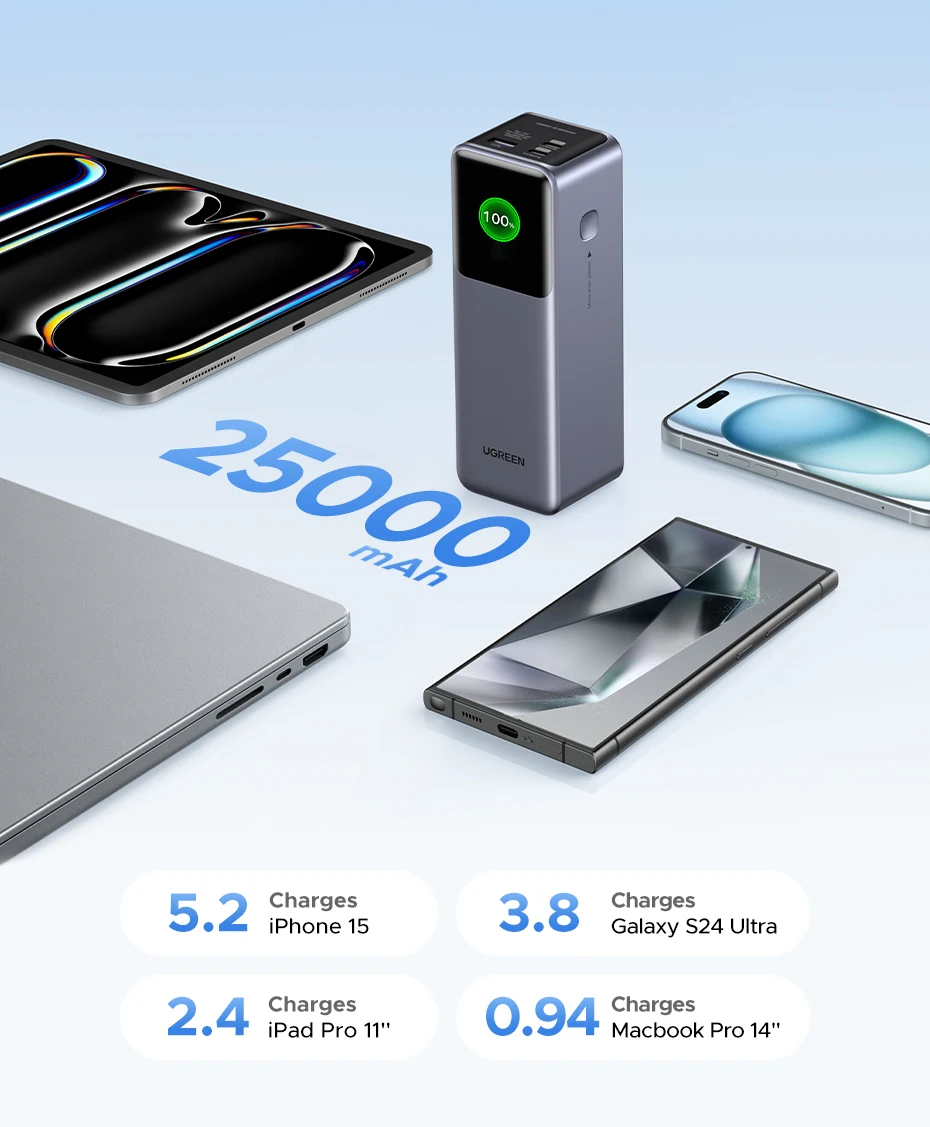
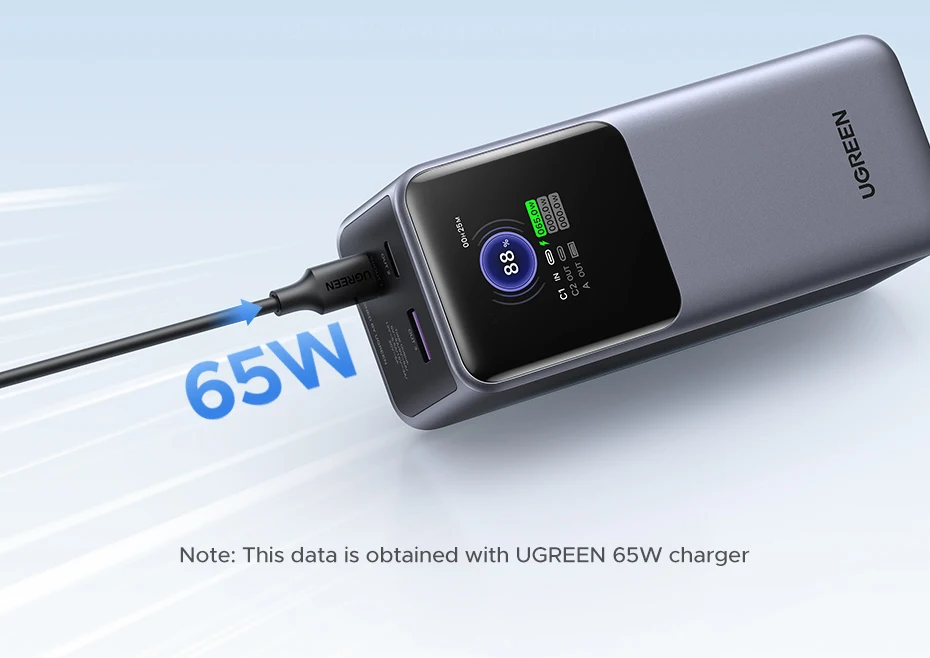
2 Hours to Fully Recharge
USB C1/C2 supports 65w input
This data is obtained with UGREEN 65W charger
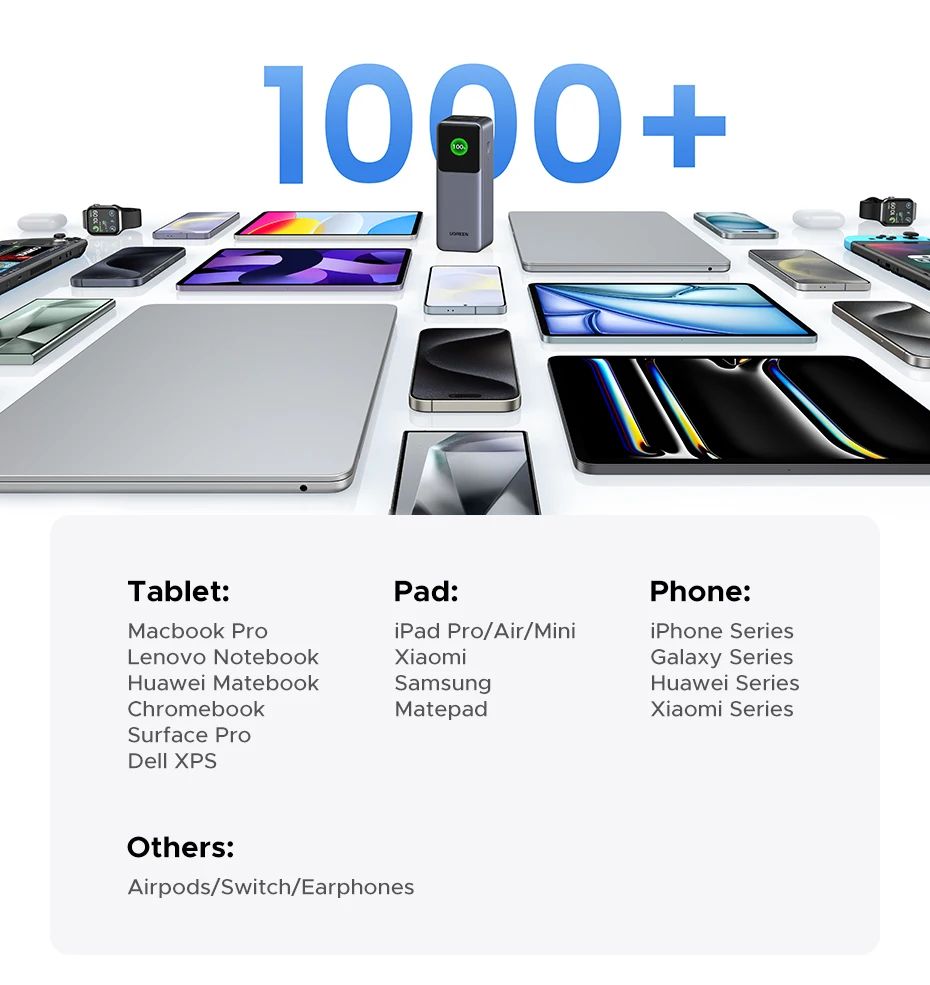
Wide Compatibility
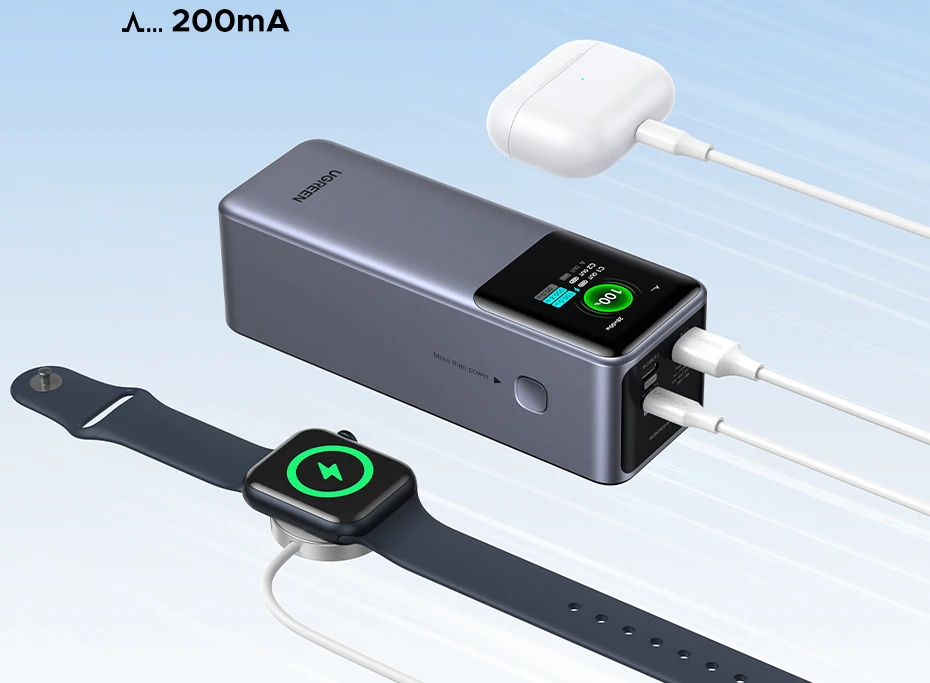
Trickle Charging Mode for
low-current devices
Press and hold for 3 seconds to activate/deactivate trickle charging mode
Flight Approved
Ideal for air travel, portable and space-efficient.Battery energy 90Wh complies with flight cabin carring standards (<100Wh).

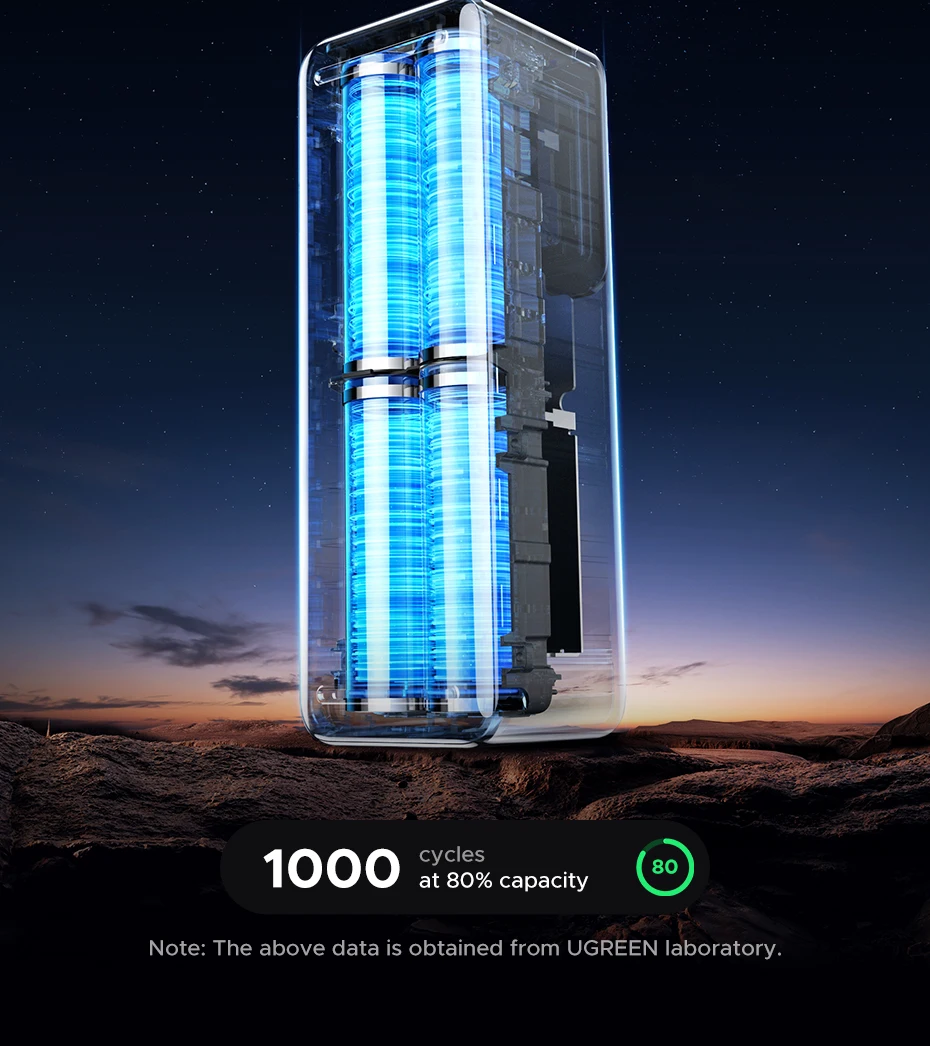
Same 21700 Batterycell as for
Tesla Model 3
After 1000 charge and discharge cycles, the battery capacity still >80%
1000 cycles at 80% capacity
Note: The above data is obtained from UGREEN laboratory.
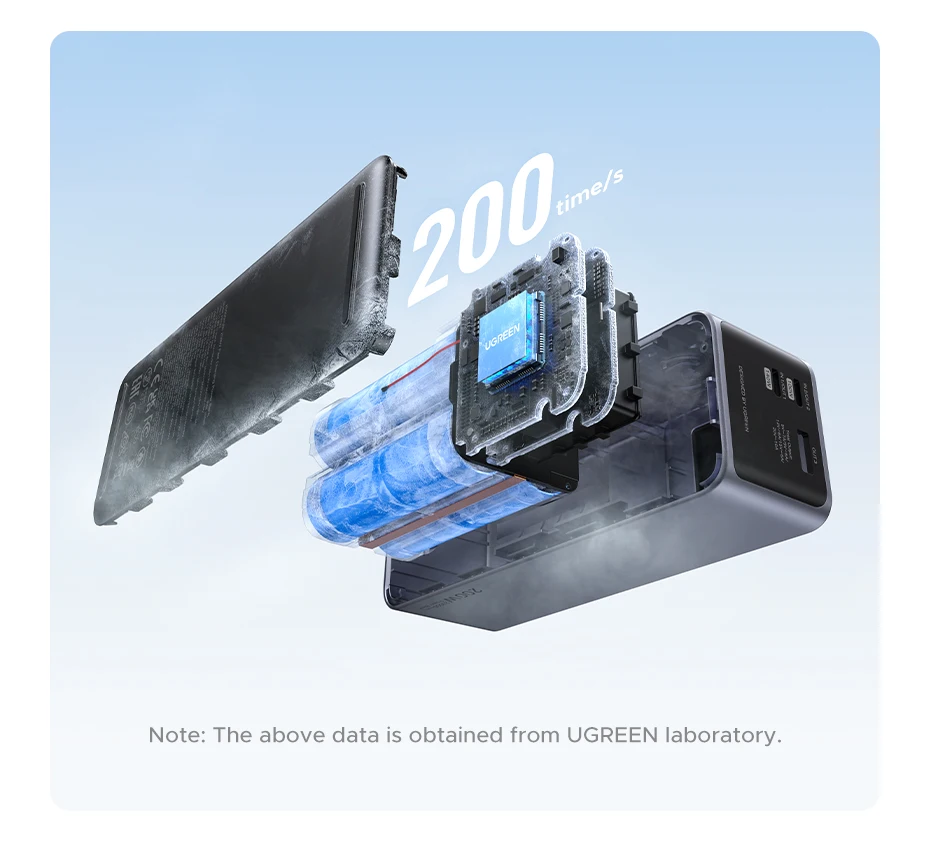
Thermal Guard™ System
Built-in temperature control sensor, real-time measurement 200 times/s
Note: The above data is obtained from UGREEN laboratory.
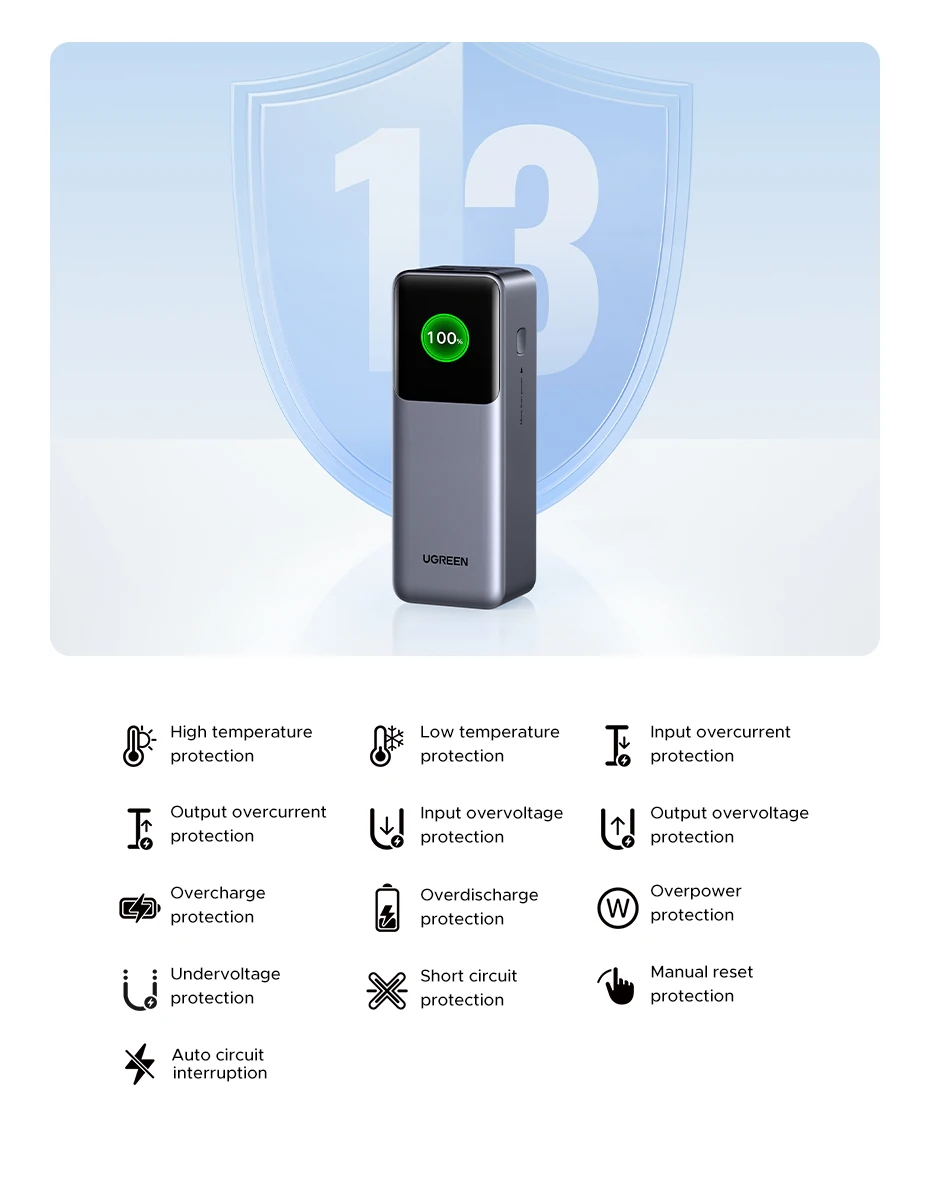
13 Layers Protection for Your Charging
High-temperature protection
Over-charge protection
Short-circuit protection
Disconnection protection
Input Over-current protection
Output Over-voltage protection
Low-temperature protection
Over-discharge protection
Undervoltage protection
Recovery protection
Input Over-current protection
Output Over-voltage protection
Over-power protection
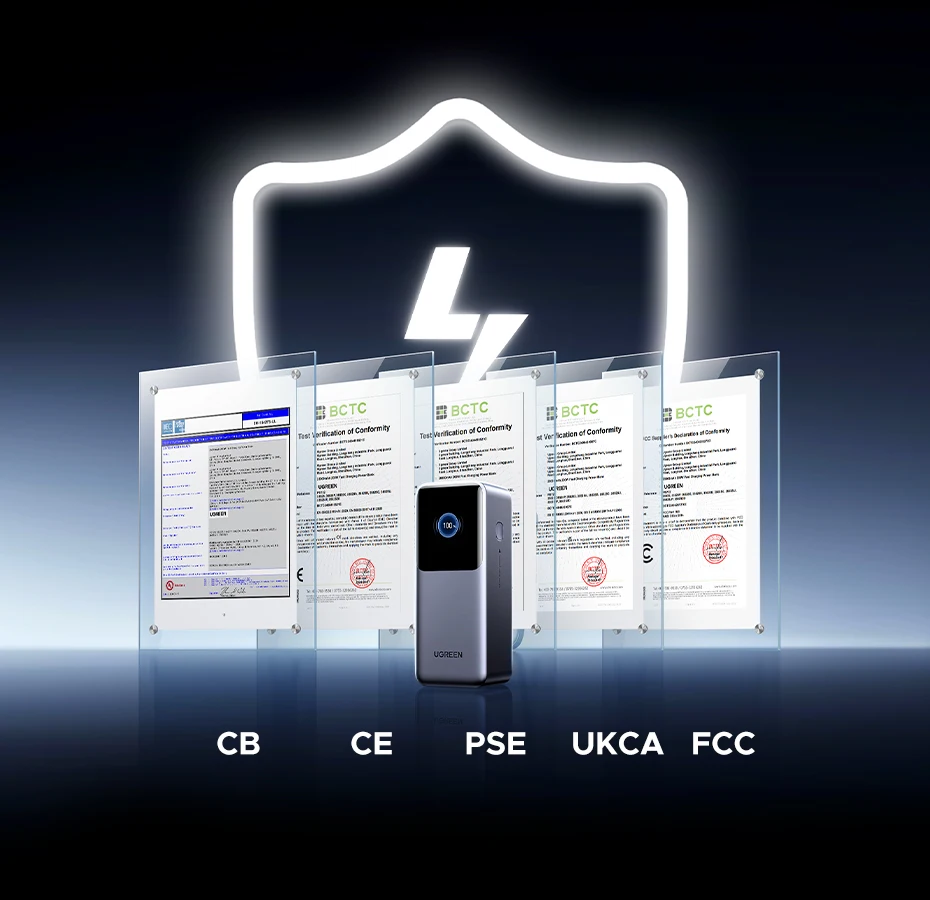
Authoritative Certification, Quality Assurance
UKCA FCC CE PSE CB



Product Parameters
Brand: UGREEN
Product Name: 25000mAh 200W Fast Charging Power Bank
Model: PB722
Battery Capacity:25000mAh
Rated Capacity:14000mAh(TYP 5V 7A)
USB-C1/C2 Input:5V⎓3A/9V⎓3A/12V⎓3A/15V⎓3A/20V⎓3.25A 65W Max
(C1C2 cannot get input simultaneously)
USB-C1 Output:5V⎓3A/9V⎓3A/12V⎓3A/15V⎓3A/20V⎓5A/28V⎓5A 140W Max
USB-C2 Output:5V⎓3A/9V⎓3A/12V⎓3A/15V⎓3A/20V⎓5A 100W Max
USB-A Output:10V⎓2.25A/5V⎓3A/9V⎓2A/12V⎓1.5A 22.5W Max
Multi Ports Max: USB C1+USB C2=200W MAX
Battery Type:Lithium-ion Battery
Net Weight:608g
Charging Time:About 2.5 hours (with PD 65W Charger)
Product Size:
54x51x155mm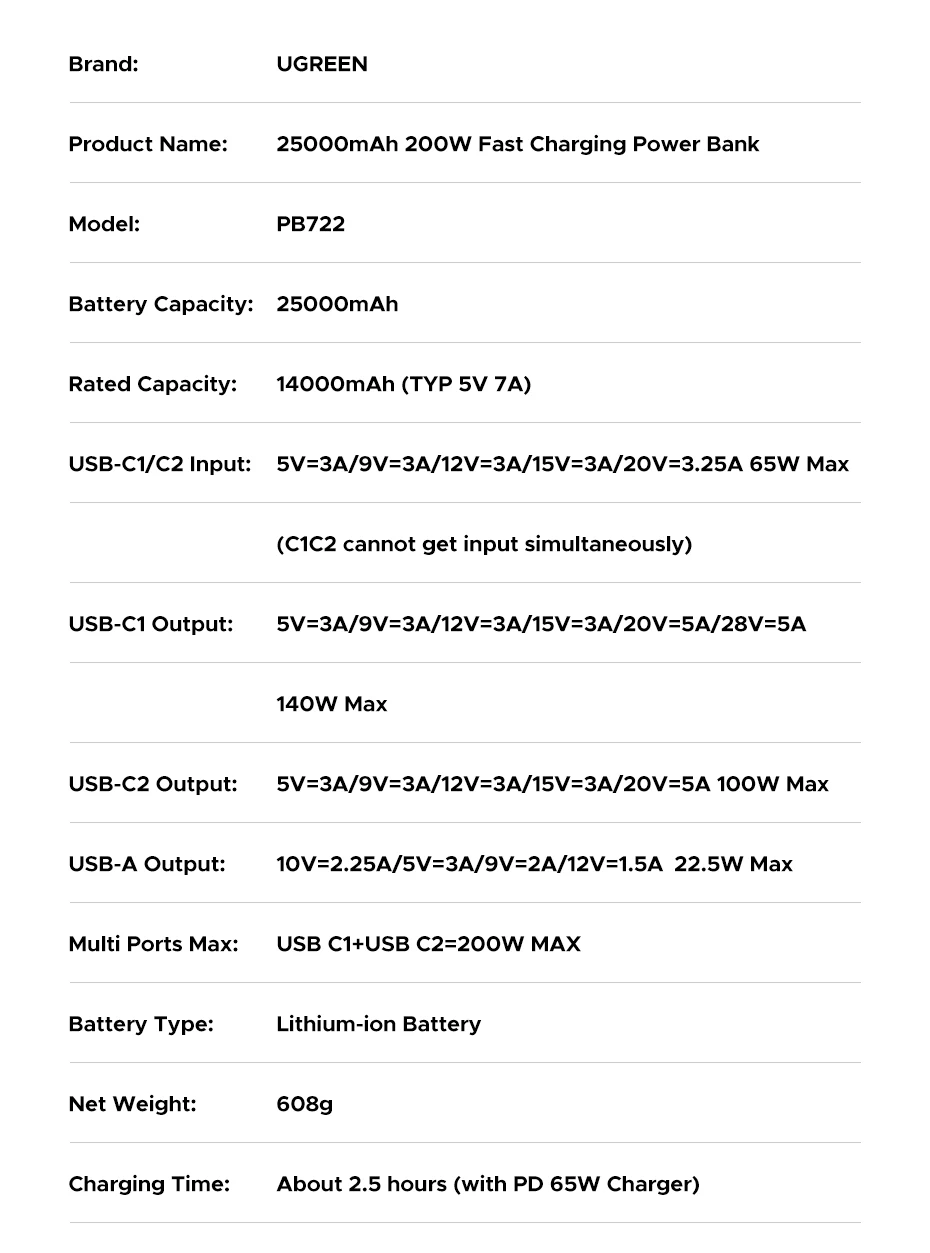


Set this power bank beside the fantastical 500,000mAh claims elsewhere in this category and it becomes a lesson in what an honest high-capacity listing looks like. The UGREEN Nexode PB722 claims 25,000mAh, and every number around that figure is internally consistent, independently checkable, and stated plainly, including the ones a dishonest seller hides. It is a premium product at a premium price, but the reason to feature it is that it demonstrates, point by point, the difference between a real specification and a printed fiction, using the exact same physics that condemns the impossible batteries.
Start with the energy figure, because it is the one that settles honesty. The listing states 90 watt-hours explicitly, and 25,000mAh at cell voltage does convert to about 90Wh, so the mAh and Wh figures agree with each other rather than contradicting. That 90Wh then sits deliberately just under the 100Wh ceiling airlines enforce for carry-on batteries, which is why the product is flight approved, and a battery cannot be both flight-legal and secretly enormous. UGREEN then does the thing that most separates honest listings from dishonest ones: it publishes a Rated Capacity of 14,000mAh at 5V alongside the 25,000mAh cell figure. Every power bank delivers less than its cell rating because converting from the cells' 3.7V up to the 5V your devices use loses energy as heat, and stating that lower real-world figure openly is a mark of a maker not hiding behind the bigger number. Even the 608g weight corroborates the capacity, since 90Wh of lithium cells has to weigh roughly that much. Fake capacities fail all of these cross-checks at once; this one passes every one.
The output specification is equally grounded. The USB-C1 port delivers up to 140W under PD3.1, sufficient to fast-charge a 16-inch MacBook Pro, USB-C2 delivers up to 100W, the two combine to 200W for charging two laptops together, and USB-A provides 22.5W. What makes this credible rather than marketing is that the listing names the fast-charging protocols it actually implements, PD3.1, PD3.0, QC4+, PPS, SCP, AFC and Apple's profile, which are specific published standards a device negotiates against, unlike the vague super fast charging language that accompanies dubious products. The claimed charge counts are similarly specific and honest: about 5.2 iPhone 15 charges, 3.8 for a Galaxy S24 Ultra, 2.4 for an iPad Pro, and notably only 0.94 for a 14-inch MacBook Pro, an admission that a 90Wh bank cannot fully refill a laptop of nearly its own battery size. The cells are 21700 lithium-ion rated to keep over 80% capacity after 1000 cycles, and a Thermal Guard sensor with multiple protection circuits handles safety. To reach the top wattages you need cables rated for them, which the listing states plainly.
As a high-capacity, high-power travel bank, this is the genuine article and a useful yardstick for judging every other battery in the category. Its 25,000mAh converts honestly to a stated 90Wh, its 14,000mAh rated capacity is published rather than hidden, its 90Wh keeps it under the airline limit and flight approved, its 140W and 100W outputs run on named PD3.1 and other real protocols, and its charge counts are specific enough to be held to, including the honest sub-one-charge MacBook figure. The only real cost is the one honesty demands: at 608g and a premium price, it weighs and costs what 90Wh of genuine, safe, fast capacity actually should. That is exactly the point.


